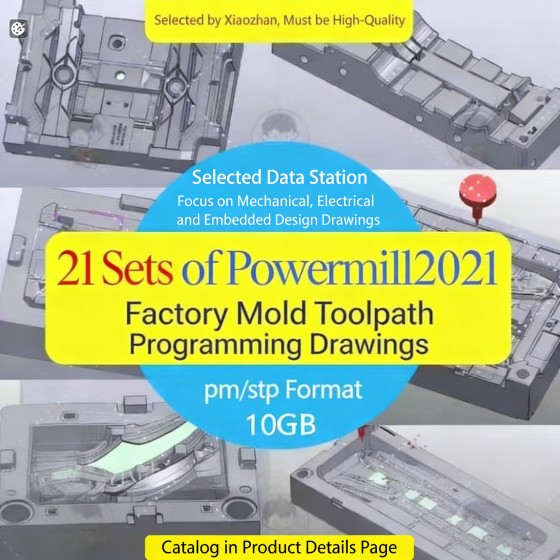
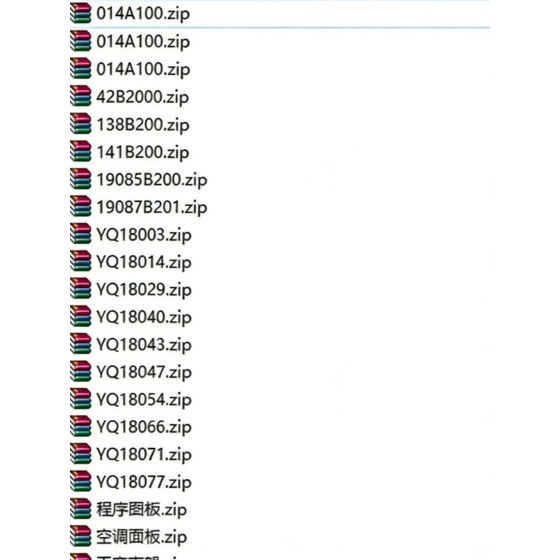
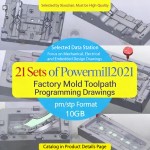
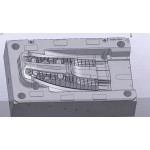
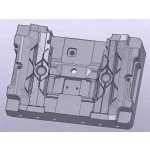
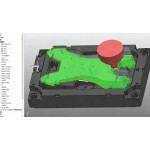
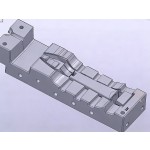
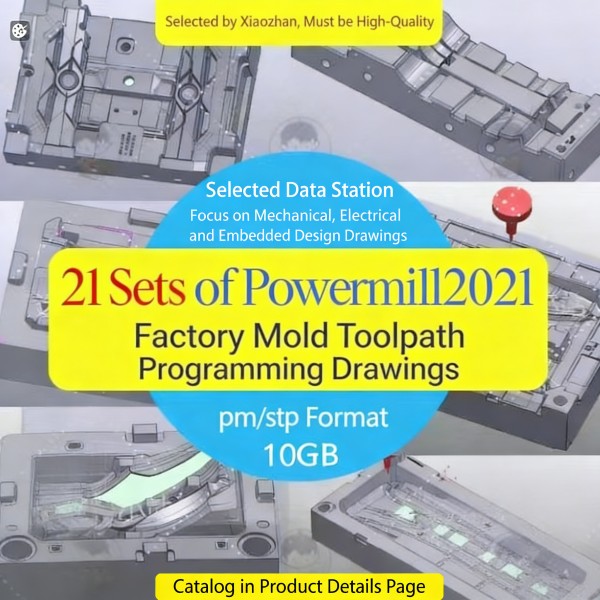
The 21 sets of PowerMILL2021 (referred to as PM2021) factory toolpath programming diagram case materials shared this time are practical practice resources specially created for mold programming practitioners, covering multiple types of mold structures, tool path solutions for complex working conditions, and complete STP original model files, taking into account the consolidation and advanced improvement of the entry into the software, perfectly adapting to the PM2021 version of the software, and helping to quickly master the standardized programming process and core skills of the factory. 1. Core composition of materials Each set of cases contains three core modules: "PM tool path map file, STP model file, key programming instructions", covering 21 different mold types and processing scenarios as a whole, avoiding case homogenization and making exercises more targeted. - PM tool path map: all are standardized tool paths that have been verified by actual production in the factory, and the programming parameters (rotation speed, feed, cutting depth, tool model, machining strategy selection) are completely retained, and can be opened and edited directly in PM2021. - STP format model: Provide the original mold 3D model, compatible with mainstream CAD/CAM software such as PM, UG, SolidWorks, etc., and can extract the model separately for reprogramming, compare the difference between the own tool path and the factory standard tool path, and accurately optimize the programming idea. - Programming instruction document: Briefly mark the material of each set of molds (steel, copper, plastic mold, etc.), structural difficulties (deep cavities, narrow grooves, complex curved surfaces, etc.), tool path design logic and precautions, to help understand the practical considerations of factory programming and avoid pitfalls. 2. Case coverage scenarios and mold types 21 sets of cases strictly benchmark the actual production needs of the factory, covering common types and core processing scenarios in the mold industry, taking into account basic and complex working conditions, and are suitable for learners at different stages to practice: 1. Plastic mold cases (8 sets): including shell molds, interior parts molds, precision electronic product molds, etc., involving finishing tool paths with high surface fluency requirements, as well as tool path optimization schemes for easily deformed structures such as thin rubber positions and inclined top grooves. 2. Hardware mold cases (5 sets): covering stamping dies, tensile dies, bending dies, for the characteristics of high hardness and strict precision requirements of hardware molds, with special tool paths such as hard material roughing and high-precision corner cleaning. 3. Copper (electrode) cases (4 sets): Including programming cases of ordinary copper males, complex curved copper males, and multi-faceted copper males, focusing on practicing the efficient roughing and mirror finishing tool path skills of copper males. 4. Special structure mold cases (4 sets): including deep cavity molds, inverted molds, and composite molds, which specifically solve the pain points of the industry such as the difficulty of deep cavity machining chip removal, the treatment of residual materials in the inverted area, and the connection of the tool-path in the composite structure multi-process.